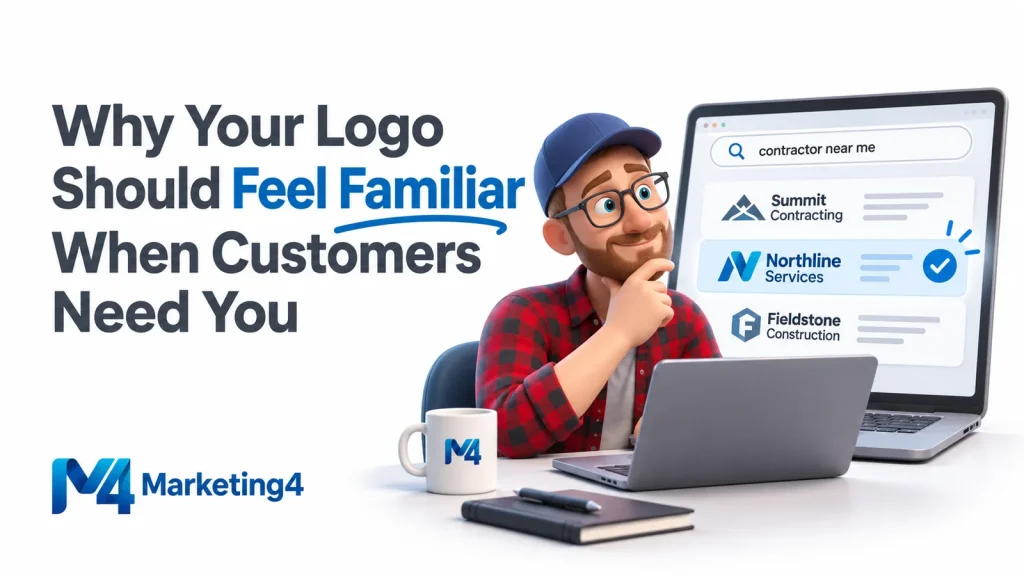

You’re searching for a company to provide a service. Several options come up, and most of the names mean nothing to you. But one of the businesses feels familiar.
You can’t explain why. You don’t remember hiring it, talking to anyone there, or even seeing one of its advertisements. Still, something about its name, colours, or logo gives you the sense that you’ve encountered it before.
Maybe you have. Its vehicles might have passed you on the road. You might have been near its signage or scrolled past its branding online. At the time, you weren’t looking for that service, so you had little reason to pay attention.
Now you do need the service, and that vague sense of familiarity suddenly has a context.
This is one of the reasons brand awareness matters long before someone becomes a potential customer. A good logo gives those everyday encounters a consistent identity, so when the person finally starts looking, your business has a chance to feel familiar rather than completely unknown.
TL;DR
People encounter businesses constantly without consciously studying or remembering their branding. Repeated exposure can sometimes make a name or logo feel familiar later, even when a person can’t recall where they’ve seen it. A distinctive logo used consistently across physical and digital touchpoints can support that recognition. It won’t automatically create trust or win a sale, but it may influence which businesses a customer notices and considers.
The Familiarity Shows Up When Someone Starts Looking
Businesses often evaluate marketing by asking how many leads it generated right away. That’s reasonable for advertising aimed at people who already need a service. But it misses much of what happens before someone starts looking.
For many services, the need is occasional. Someone might go years without needing a particular contractor, consultant, or specialist. During that time, the businesses providing those services are largely irrelevant to them. Their names and logos may be present in everyday life, but there’s no reason to investigate.
Then a need arises. The person searches Google, opens Maps, visits a few websites, or asks for recommendations. Suddenly, businesses in that category matter. One may feel familiar, even though the customer couldn’t have named it yesterday.
That feeling doesn’t guarantee the company gets chosen. But compared with an option that feels entirely unfamiliar, it may be enough to prompt a closer look.
Why a Brand Can Feel Familiar Without a Clear Memory
There’s a difference between remembering an encounter and having a sense that something has been encountered before. You can feel familiarity without being able to identify its source. You might recognize a face without remembering the person’s name or recognize a place without remembering when you visited it.
Researchers have explored related effects in how people respond to repeated visual information. One is the mere-exposure effect, the tendency, under certain conditions, to evaluate something more favourably after encountering it repeatedly. A meta-analysis covering 81 studies found evidence of this effect, while also finding that its strength changes with repetition and context. More exposure is not always better.
Another concept is processing fluency. Familiar information can become easier to process, and that ease may influence our evaluation of it. Research on brand logos, repetition, and processing fluency helps explain why earlier encounters can matter at the time someone makes a judgment. More recent research on logo exposure and brand familiarity explores this relationship directly.
That doesn’t mean a glance at a passing vehicle is guaranteed to leave a meaningful subconscious impression. Plenty of things go unnoticed and forgotten. Nor does it mean customers are incapable of making rational decisions. The more modest point is that a brand can begin to feel familiar without the person having a specific, consciously recalled encounter to point to.
For businesses, this opens up a reason to care about ordinary visibility even when no immediate inquiry follows.
Brand Recall and Brand Recognition Are Different
Brand recall is when someone can name a company without being prompted. If you asked them to name local businesses offering a particular service, the ones they name have achieved some level of recall.
Brand recognition happens when the person sees the business’s name or visual identity and realizes it is familiar. That can happen while comparing Google Business Profiles, visiting websites, looking through recommendations, or reviewing proposals.
A local business doesn’t necessarily have to be the first company someone thinks of to benefit from brand awareness. It can still have an advantage if, when presented with several options, it feels familiar enough to warrant a second look.
This is especially relevant to the customer journey for local service businesses, where the time between first encountering a company and actually needing its services can be long.
What the Logo Has to Do With It
A name might appear on a sign one day, a vehicle another day, and a website several months later. A recognizable visual identity gives those separate encounters something in common.
That’s where logo design becomes more than an exercise in choosing colours and typography. The purpose isn’t merely to produce an attractive graphic. It’s to establish a visual identity that can consistently belong to the same business wherever it appears.
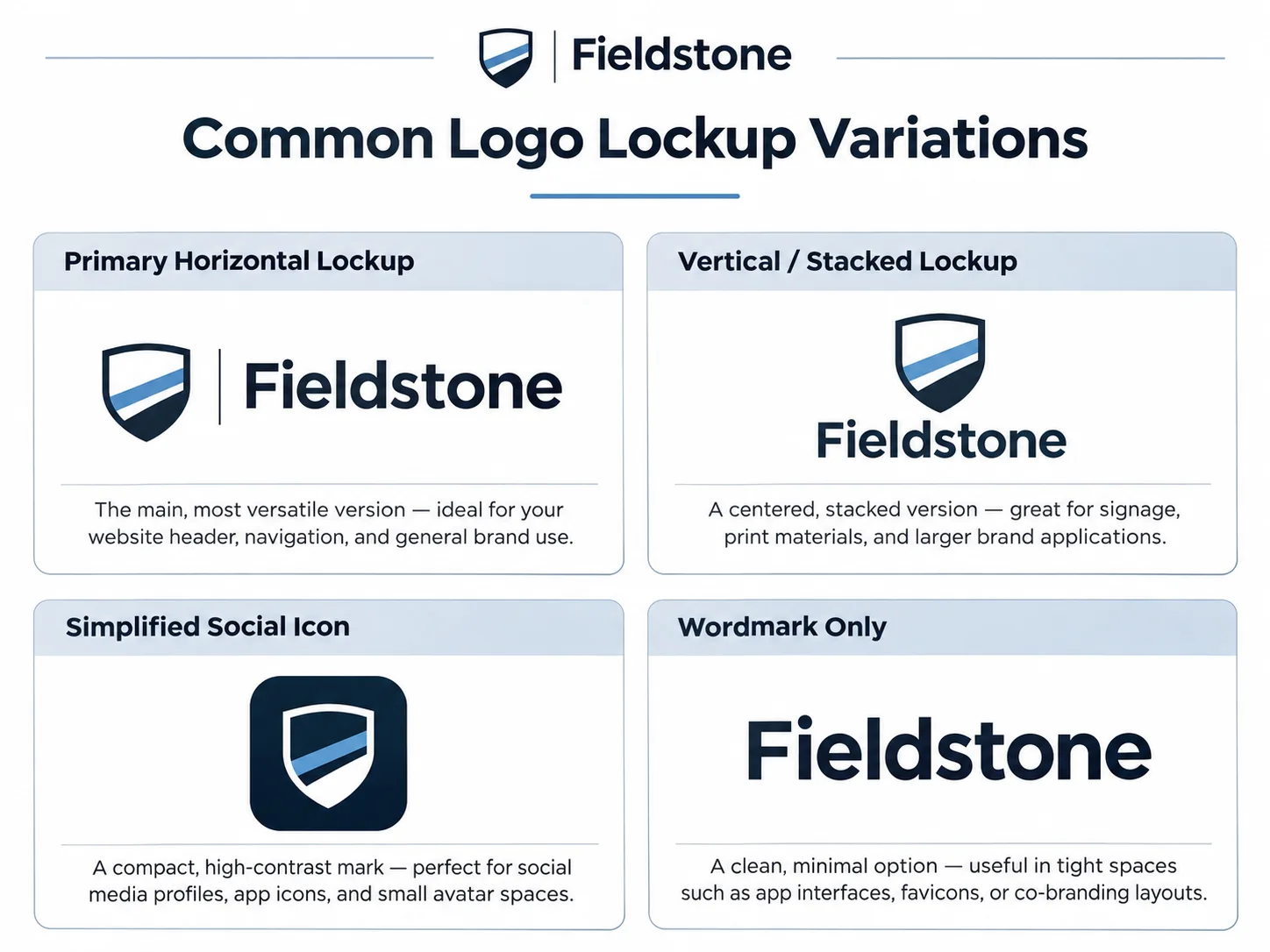
A logo system commonly includes a few elements. The wordmark is the styled company name. The logo mark is a standalone symbol or monogram. A lockup is an approved arrangement of the mark, the wordmark, and sometimes a tagline. There might be a horizontal version, a stacked version, and a compact symbol for small spaces.
These variations should all feel like one identity, not separate designs.
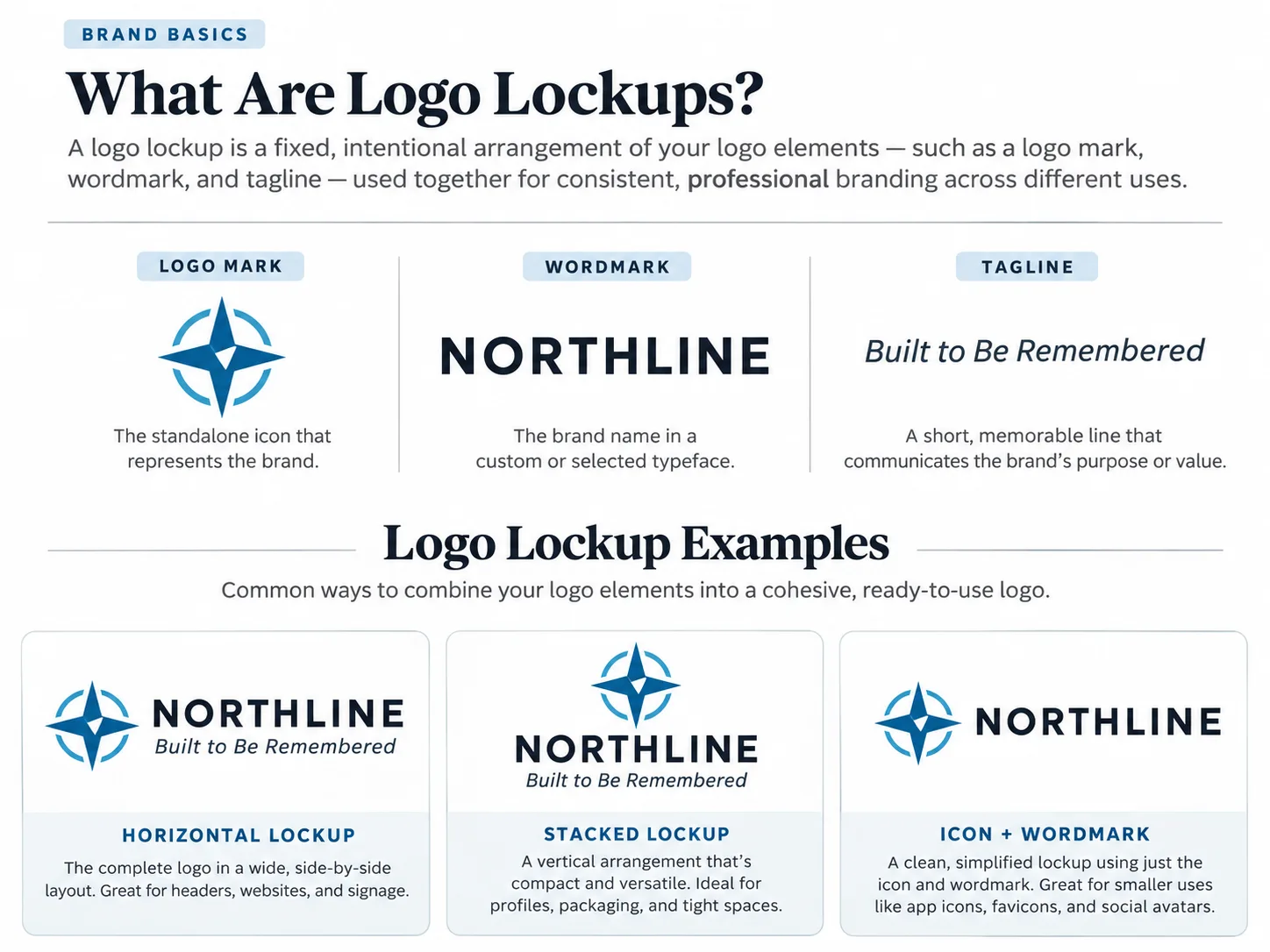
A distinctive logo mark can be especially useful when someone encounters the branding briefly or at a distance. But there is a catch: an unfamiliar symbol doesn’t automatically communicate whose business it represents. Research comparing image-based and text-based logos suggests that text-based logos can be more effective for unfamiliar brands, while image-based marks become more effective as brand familiarity develops.
For a smaller or growing business, this supports a practical approach: use the mark alongside the company name long enough to establish the association. Recognition of the symbol may become more useful over time.
Consistency Lets Separate Encounters Reinforce One Another
Think about how many places the same business identity might appear: vehicles, storefronts, project signs, uniforms, business cards, social media accounts, sponsorships, Google Business Profiles, and the company’s website.
No single encounter has to do much. The value comes from giving people a chance to connect those encounters to the same business.
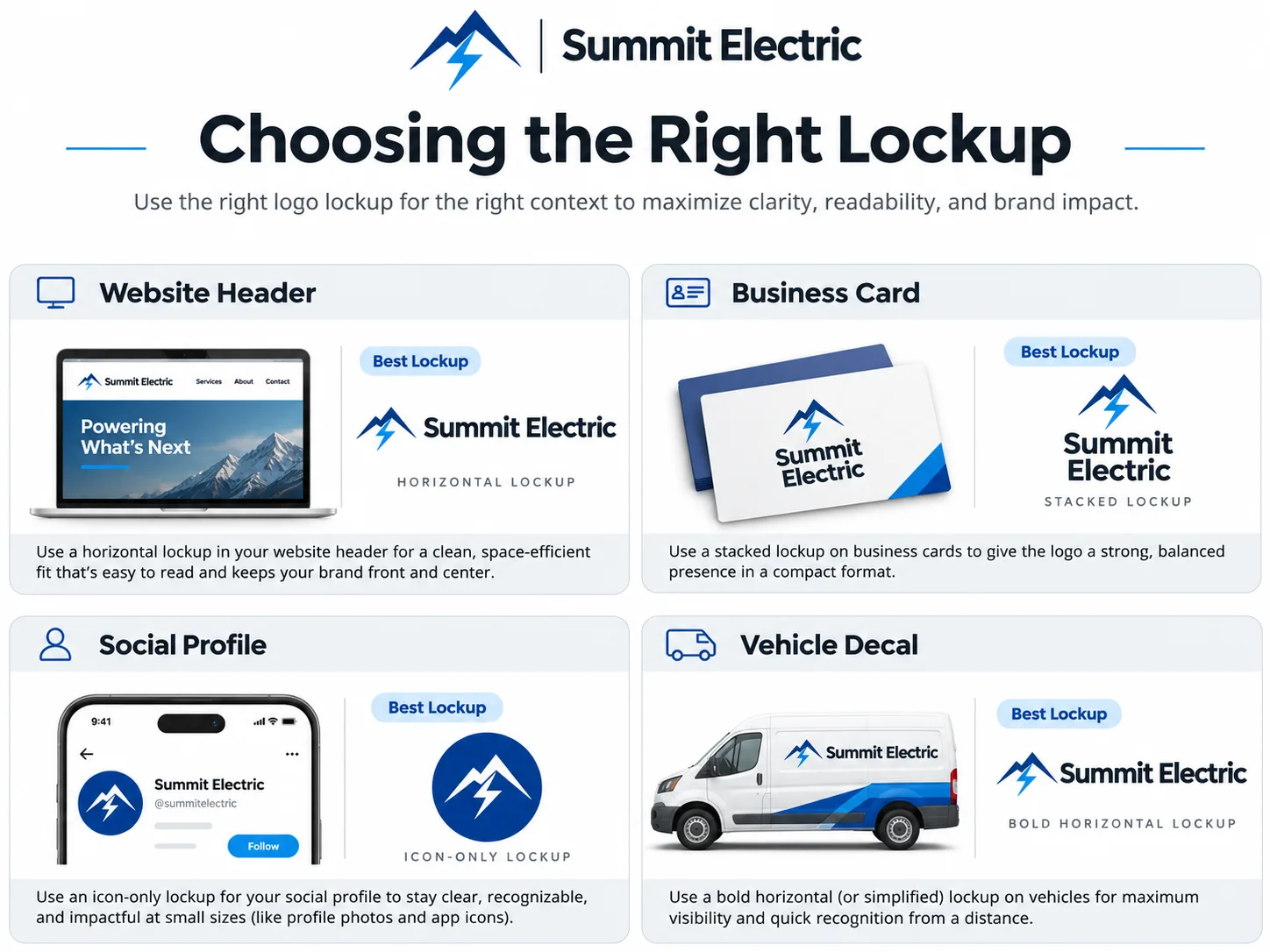
If the vehicle uses one logo, the website uses a different font and colour scheme, and the social media profile features an unrelated symbol, the association becomes harder to build. The brand keeps introducing itself in different ways.
That is one reason we treat signage and marketing collateral design as extensions of the overall brand identity. The format can change to suit the space, but the recognizable elements should remain consistent.
It also helps explain why redesigning a logo too frequently can be counterproductive. A business may spend years building familiarity around an identity only to replace it before that recognition has had much chance to accumulate.
Feeling Familiar Isn’t the Same as Being Trusted
There’s an important distinction between familiarity and trust. A company that feels familiar hasn’t necessarily earned the customer’s confidence. It has simply moved from completely unknown to somewhat recognizable.
What happens next still matters. The customer might check reviews, compare services, look at real examples of work, assess the website, or speak to someone from the company. If those experiences are reassuring, familiarity may have helped bring the business into consideration. If they’re disappointing, the recognizable logo won’t save the sale.
Familiarity can even work against a company when its visual identity has become associated with poor experiences. Brand awareness is not automatically positive brand equity.
For service businesses, credibility comes from what the business actually does and how it treats customers. We explore that broader connection between reputation, expertise, and growth in Service Business Marketing Explained.
Should You Change Your Logo to Make It More Recognizable?
Not necessarily. An established business may already have valuable familiarity attached to its existing name, colours, typography, or symbol. Changing all of those elements at once could discard recognition that took years to build.
Before redesigning, look at how consistently the identity is used and whether it works in real applications. Is the logo readable on a screen and on a sign? Is there a practical horizontal and compact version? Does the symbol look sufficiently distinct from nearby competitors? Can the company be identified without relying on tiny text?
Sometimes a company needs a genuinely new identity. Sometimes it needs a better logo mark added to an existing wordmark. Often it simply needs a proper set of lockups and consistent rules for using them.
The design decision should support the business’s long-term recognition, not just today’s preference for a particular style.
Brand Awareness Has Value Before It Generates a Lead
A business shouldn’t abandon lead generation to pursue vague awareness campaigns. People who are ready to buy still need to find the business, understand its services, and have a reason to contact it.
But a strategy focused only on immediate inquiries misses the value of being present in the market before someone needs you. The most useful approach connects the two: ongoing brand exposure builds the possibility of familiarity, while search visibility, strong information, and a good sales process help when the customer is ready to act.
That distinction fits into a broader marketing strategy and the question of how businesses can stand out as competition for attention increases.
Measuring this isn’t as simple as counting clicks. You can ask customers whether your company was familiar before they searched, track whether they mention having seen the brand around, and monitor trends in branded searches. None is a precise measure of how much a logo contributed to a sale, but together they can provide useful signals.
When the Need Arrives, Does Your Brand Feel Familiar?
Most people aren’t thinking about your business today. They have no reason to. Your logo may be part of the everyday visual background of their lives, and they may not remember seeing it at all.
Later, they need what you offer. They search. They compare. They come across your business.
At that point, your goal isn’t necessarily for them to remember where they saw your vehicle, sign, or advertisement. It’s for the name and identity to evoke a much simpler response: this feels familiar.
A distinctive, consistently used logo can’t guarantee that outcome. But it gives your brand a better chance of connecting the encounters that happen long before someone is ready to buy with the decision they’re making now.
That’s what a good visual identity should be built to support.