TLDR: Search Engine Optimization (SEO) is the process of making your business easy to find on Google and other search tools. It includes keeping your business details consistent, showing proof of your work through photos and reviews, and answering real customer questions. This guide explains how local SEO works, how to win the map pack, and why good SEO also prepares your business for AI-powered search.
If you own a plumbing shop, landscaping company, or construction business, you already understand one thing.
Being invisible is the fastest way to lose work.
Years ago, you could rely on the Yellow Pages or word of mouth alone. Today, your customers start by typing their problem into a phone.
You might be asking yourself what is SEO and why every marketing person keeps bringing it up.
Search Engine Optimization is the process of making sure your business shows up when someone searches for your services.
Think of the internet like a giant, messy library with billions of books. Google is the librarian.
When someone searches for a “contracting company in Toronto,” Google looks for the most trustworthy and relevant option to recommend.
SEO is the work you do to help Google understand that your business deserves to be recommended.
If you are not visible on the first page, you are usually invisible to that customer.
What is SEO for Local Service Businesses?
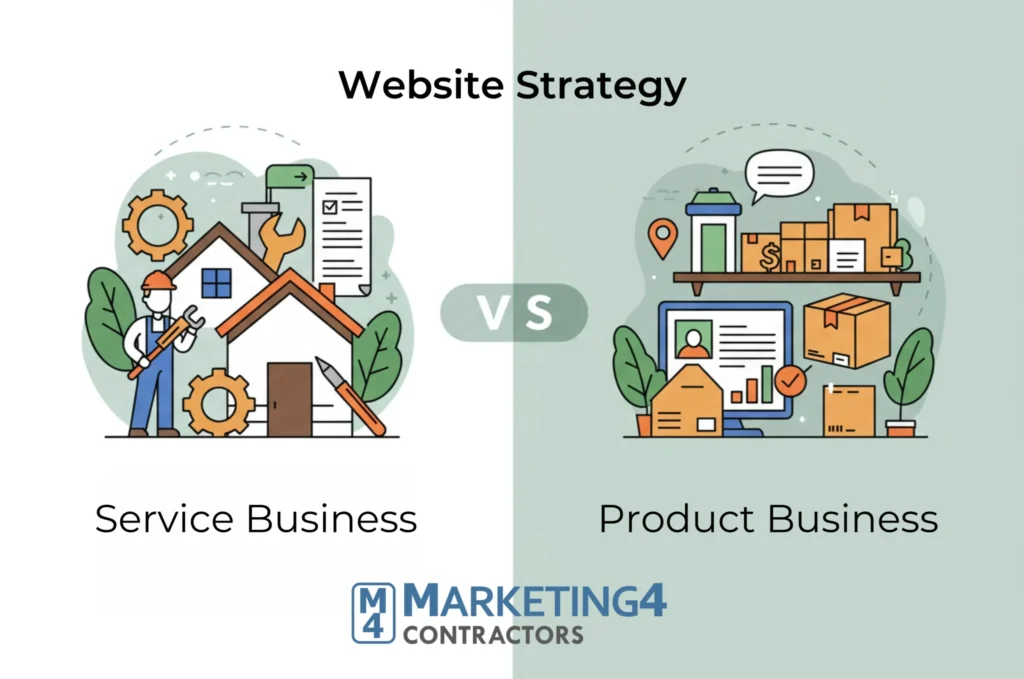
Search Engine Optimization for local service businesses works differently than it does for online stores.
You are not trying to ship products across the country.
You are trying to get a call from someone nearby who needs help right now.
For that to happen, Google needs to clearly understand three things:
- What services you offer
- Where you offer them
- Why people trust you
Local SEO is about answering those questions clearly and consistently across your website, your listings, and your reviews.
Search Intent: The “Why” Behind the Click
Not all Google searches are created equal. Understanding “Search Intent” means knowing why a person is typing certain words.
Imagine someone types “how to fix a leaky faucet.” They are looking for a DIY answer. They might not want to hire you yet.
Now imagine someone types “emergency plumber near me.” That person has a flooded kitchen and a credit card in their hand.
A good SEO strategy targets both. You use blogs to help the DIYer (who will remember you later) and service pages to catch the person who needs help right now.
By understanding intent, you make sure you aren’t just getting “clicks,” but you are getting the right kind of phone calls.
Winning Strategies for Local Search Engine Optimization
Strong SEO is split into two categories: technical and non-technical.
Technical SEO (On-Page) is the work inside your website. It is making sure your site is fast, secure, and has the right “labels” so Google knows you are a plumber and not a baker.
Non-technical SEO is the work outside your website. It is about building your reputation, getting links from other local sites, and managing your reviews.
Here are the main pillars that help local businesses rank.
Helpful Content
Google loves websites that solve problems for people. Helpful content is any information on your site that answers a customer question.
If you are an electrician, you could explain how to reset a tripped breaker. When you provide value for free, Google sees you as an authority in your field.
This strategy is a core part of marketing for local businesses because it builds trust before the phone even rings.
Blogs and Education
A blog is just a section of your website where you post regular updates and advice. Think of it as a library of your expertise.
Google notices when a website adds new information frequently. Each new blog post is a new opportunity to show up in a search result.
If you write about “how to maintain a furnace,” you will attract homeowners who need that specific help. This is why blogs are so effective for long term growth.
The Local 3-Pack or Map Pack
When you search for a service, Google often shows a map with three businesses at the top. This is known as the local map pack.
Most calls and clicks go to these three listings. To appear here, you need a verified and well-managed Google Business Profile.
For many plumbers, electricians, and movers, ranking in the map pack matters more than ranking in the regular links below it.
The NAP Concept and Identity Consistency
NAP stands for name, address, and phone number. Google checks this information across your website, directories, and listings.
If your business details change from place to place, it creates confusion. Think of it like giving directions to a job site.
If every person gets a slightly different address, someone will get lost. Consistency helps Google trust that your business is real and established.
Backlinks and Citations
Backlinks are links from other websites to yours. They act like digital referrals or votes of confidence.
Citations are mentions of your business on local directories or industry sites. Each mention confirms that your business exists and operates locally.
Proof of Work and Visual SEO
In industries like marketing for landscapers, customers want to see real projects. This is “Visual SEO.”
Photos of your team, equipment, and completed work build trust. Google can actually understand images and associate them with your services.
Uploading photos regularly shows activity and legitimacy. It tells Google that you are still active in the community.
Helpful Content and Answering Real Customer Questions
One of the most effective SEO strategies is simple. Answer the questions your customers already ask you every day.
If you are an electrician, explain why breakers trip. If you are a contractor, explain what impacts project pricing.
This type of helpful content shows expertise and builds trust before the first phone call.
This approach works especially well for marketing for contractors and service businesses that rely on a good reputation.
What is SEO in the Age of Artificial Intelligence?
Search is changing. People are now asking tools like ChatGPT and Gemini for recommendations. This has introduced terms like AEO and AIEO.
AEO stands for answer engine optimization. AIEO stands for artificial intelligence engine optimization.
These tools provide a direct answer rather than a list of links. Good SEO makes your business easier for AI tools to understand.
If your information is clear and well-reviewed, AI tools are more likely to surface your name as the top recommendation.
White Hat SEO vs Black Hat Tactics
There are good ways and bad ways to do SEO. White hat SEO focuses on long-term growth and helpfulness.
Black hat tactics try to manipulate rankings through tricks. These shortcuts may work briefly, but they fail over time and can ruin your reputation.
Proper SEO Strategies to Follow
- Creating helpful website content
- Writing blogs that answer real questions
- Maintaining accurate business information
- Getting real customer reviews
- Designing pages for humans rather than bots
This aligns with how SEO for local businesses should be handled for long term success.
Bad SEO Tactics to Watch Out For
Many business owners get burned because they were never shown what to look out for. Here are common bad tactics to avoid.
- Buying fake Google reviews to boost ratings quickly
- Stuffing keywords unnaturally into website pages
- Creating dozens of thin city pages with no real content
- Using backlinks from unrelated or spammy websites
- Hiding text on pages that visitors cannot see
- Promising first page rankings in 30 days
These tactics are designed to manipulate search engines. Eventually, Google catches them and punishes the website.
Recovering from a penalty often takes months or even years. If an SEO company cannot explain their work in simple language, take that as a warning sign.
Now What? Conversion
Getting found is only half the job. Your website needs to work once people arrive. This is called conversion.
Most local searches happen on mobile phones. If your site is slow or confusing, people will leave immediately.
This hurts your conversions and tells Google your site is not helpful. A clear website design must have a big “Call Now” or “Get a Quote” button.
SEO brings the horse to water; your website design makes it drink. Without a clear call to action, all that traffic is wasted.
SEO Scorecard
You should never have to guess if your SEO is working. You need a scorecard to see the score of the game.
This is where tools like Google Search Console come in.
This tool shows you exactly how many people saw your site and what words they typed to find you. You should always own your own data.
If a marketing agency refuses to give you access to your own “scorecard,” that is a major red flag for any business owner.
The Power of Reviews in Local Search
Reviews are one of the strongest local ranking signals. They show that you do real work for real people.
Businesses with consistent reviews often rank higher. Many owners use a review funnel for local businesses to simplify asking for feedback.
Always reply to your reviews. Responses show professionalism and reinforce that you are an active, local business.
Winning at Local Business Growth
At its core, Search Engine Optimization connects problems with solutions. Your customer has an issue and you have the skills to fix it.
SEO is the bridge that helps the two of you meet. You do not need to be a technical expert to succeed.
You just need to be consistent, honest, and helpful. Those small actions add up to a dominant online presence.
Being found is the first step toward being hired. Focus on the basics, stay patient, and let your expertise shine through your online profile.
Key Takeaways
- SEO helps customers find your business when they need professional help.
- Targeting Search Intent ensures you attract actual customers, not just browsers.
- The map pack is the most valuable real estate for local service providers.
- Consistency in your NAP information and real reviews build trust with Google.
- A Scorecard like Search Console proves your marketing is actually working.
- Your website must be built for Conversion to turn visitors into callers.
- Good SEO principles prepare your business for AI-based discovery tools.